

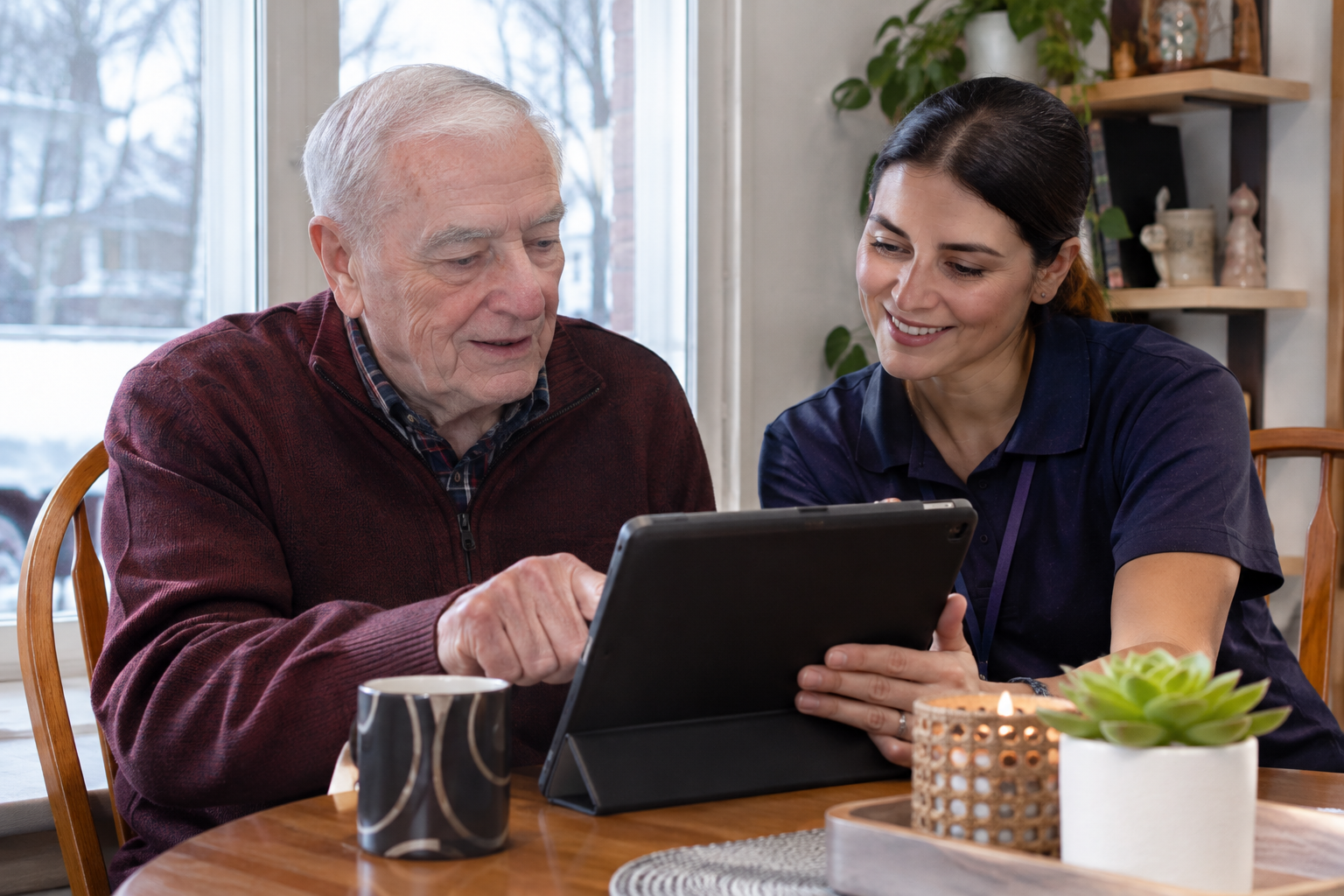
Technology has become part of everyday life. From video calls and online appointments to digital calendars and grocery ordering, many activities now involve a smartphone, tablet, or computer.
For older adults, these tools can provide convenience, independence, and meaningful connections with family. However, technology can also feel overwhelming when devices change, applications require updates, or familiar services move online.
At Seniors Solution, we understand that maintaining independence involves more than physical assistance. It also means helping older adults remain connected to the modern world in ways that feel comfortable, safe, and manageable.
Our personalized home care and companionship services support older adults throughout Ottawa, Kanata, Nepean, Barrhaven, Orléans, Westboro, Rockcliffe, Alta Vista, Manotick, and surrounding communities.
With patience, encouragement, and practical assistance, seniors can continue enjoying technology without feeling pressured to learn everything at once.
Technology Can Help Seniors Stay Connected
For many older adults, one of the greatest benefits of technology is staying in touch with loved ones.
Families are not always located in the same city. Adult children may live in another province, while grandchildren may be studying or working abroad.
Video calling allows families to share everyday moments even when they cannot visit regularly.
A grandparent in Kanata may enjoy watching a grandchild celebrate a birthday through a video call. Someone in Nepean may use a tablet to speak with relatives overseas.
These interactions can help maintain relationships and reduce feelings of isolation.
Digital Independence Starts With Familiar Tasks
Learning technology does not need to begin with complicated applications.
For some older adults, the first goal may simply be learning how to answer a video call.
Others may want to:
- Send text messages
- View family photographs
- Check appointment reminders
- Listen to favourite music
- Read digital books
- Access weather information
- Join online community activities
The most useful technology is often the technology that supports an existing interest or routine.
Rather than introducing numerous features at once, families can focus on one practical skill at a time.
Why Technology Can Feel Intimidating
Digital tools change frequently.
Buttons move, passwords expire, applications update, and unfamiliar messages appear on screens.
For someone who did not use computers throughout their working life, these changes can create frustration.
Physical changes may also affect how comfortably an older adult uses a device.
Smaller text can be difficult to read. Touchscreens may be challenging for someone with reduced hand dexterity. Hearing changes may make video conversations harder to follow.
These difficulties do not necessarily mean the person cannot use technology.
Sometimes the device or learning approach simply needs to be adjusted.
Patience Makes Learning Easier
One of the most important parts of helping an older adult learn technology is allowing enough time.
Repeatedly taking the device away and completing tasks for someone may solve an immediate problem, but it does little to build confidence.
A more supportive approach involves demonstrating a task, explaining the steps clearly, and allowing the person to try.
Simple written instructions can also be helpful.
For example, a family member might prepare a short guide explaining how to start a video call or find photographs.
The goal is not speed.
It is helping the individual become comfortable completing useful tasks independently.
Video Calls Can Make Family Relationships More Personal
Telephone conversations remain valuable, but video calls offer another way to connect.
Seeing facial expressions, familiar surroundings, and family activities can make conversations feel more personal.
Grandparents may enjoy:
- Watching grandchildren open presents
- Seeing family pets
- Sharing celebrations
- Participating in virtual family gatherings
- Showing relatives their garden
- Reading stories to grandchildren
For older adults living alone, these moments can become enjoyable parts of the weekly routine.
Companion care can help provide a supportive environment for these activities, while families can assist with device setup and technical questions.
Online Appointments Require Preparation
Some healthcare providers offer virtual appointments.
These services may reduce travel for certain consultations, although in-person care remains necessary in many situations.
Older adults may need assistance preparing for a virtual appointment.
Helpful preparation can include checking that the device is charged, confirming the appointment time, testing the internet connection, and finding a quiet, comfortable location.
Caregivers may provide practical assistance within their role, while healthcare professionals remain responsible for medical advice and treatment decisions.
Privacy and the older adult’s consent should always be respected.
Digital Calendars Can Support Everyday Organization
Remembering appointments and activities can become more complicated when schedules are busy.
Digital calendars and reminders may help older adults keep track of:
- Medical appointments
- Family visits
- Community activities
- Birthdays
- Transportation arrangements
- Regular household tasks
However, digital tools should complement the individual’s preferred system.
Some people may still prefer a paper calendar displayed in the kitchen.
Others may enjoy using a smartphone.
The best approach is whichever method the person understands and uses consistently.
Online Safety Is an Essential Part of Digital Confidence
Technology offers convenience, but online scams and fraudulent messages are important concerns.
Older adults, like people of any age, may encounter suspicious emails, fake delivery notices, impersonation attempts, or requests for personal information.
Families can help by discussing basic digital safety habits.
These include:
- Avoiding unfamiliar links
- Keeping passwords private
- Questioning unexpected requests for money
- Verifying unusual messages independently
- Avoiding sharing banking details with unknown contacts
- Asking a trusted person before responding to suspicious requests
Caregivers should not request access to clients’ passwords, financial accounts, or sensitive personal information unless there is a specifically authorized and appropriate reason.
Digital confidence should include knowing when to stop and ask questions.
Technology Should Never Replace Human Companionship
Video calls, messaging, and online entertainment can help older adults stay connected, but they do not replace meaningful in-person interaction.
A person may communicate with family online and still benefit from regular visits, shared meals, walks, and community activities.
At Seniors Solution, we believe technology works best as an additional tool for connection.
Our companion care services help older adults enjoy conversation, hobbies, and everyday activities in familiar surroundings.
Digital tools can support these relationships rather than replace them.
Technology Can Make Hobbies More Accessible
Digital devices can also help older adults continue enjoying personal interests.
Someone who loves reading may appreciate adjustable text sizes on an e-reader.
A music enthusiast may enjoy listening to favourite songs or exploring recordings from earlier decades.
An older adult interested in cooking may watch recipe demonstrations.
Others may enjoy:
- Digital puzzles
- Audiobooks
- Educational videos
- Online museum collections
- Gardening tutorials
- Language-learning activities
- Virtual community programs
These activities can provide entertainment and opportunities for continued learning.
The key is choosing activities that reflect the individual’s interests rather than assuming every older adult enjoys the same things.
Making Devices Easier to Use
Small adjustments can make technology more comfortable.
Families may consider increasing font sizes, adjusting screen brightness, simplifying the home screen, or using accessibility features.
A tablet stand can make video calls more comfortable without requiring someone to hold a device for long periods.
Larger icons and clearly labelled contacts may also help.
For individuals with hearing or vision difficulties, accessibility settings can sometimes improve the experience.
When necessary, family members or qualified technical support providers can help configure devices appropriately.
Supporting Seniors Living With Dementia
Technology may be useful for some individuals living with dementia, depending on their abilities and preferences.
Familiar photographs, favourite music, and simple video calls may provide opportunities for connection.
However, complicated applications or frequent changes can create frustration.
Care should remain individualized.
Families and caregivers can focus on familiar activities, simple instructions, and calm assistance rather than expecting the person to master unfamiliar systems.
Digital tools should support the individual’s comfort and established care plan.
Families Can Help Without Taking Over
Adult children sometimes become frustrated when explaining technology repeatedly.
They may feel it is easier to complete the task themselves.
However, preserving independence means recognizing that learning takes time.
A helpful approach is to choose one task that matters to the older adult.
For example, if a parent wants to view family photographs, the first lesson can focus entirely on opening the photo application.
Once that feels comfortable, another skill can be introduced.
This approach allows confidence to develop gradually.
Technology and Home Care Can Work Together
Digital tools may complement everyday home support in practical ways.
For example, an older adult may use a digital calendar to remember an upcoming community activity while receiving transportation assistance to attend it.
A client may enjoy selecting recipes online while a caregiver assists with meal preparation.
Someone may participate in a family video call during a companion visit, with appropriate consent and privacy.
These examples show how technology can fit naturally into established routines without becoming the centre of the care experience.
Personalized Support Across Ottawa Communities
Every older adult has different interests, abilities, and comfort levels with technology.
A client in Westboro may enjoy online book clubs and digital reading.
Someone in Rockcliffe may use video calls to maintain international family connections.
An older adult in Alta Vista may benefit from appointment reminders and practical transportation assistance.
A family in Barrhaven may want companionship for a parent who spends considerable time alone.
Clients in Ottawa, Kanata, Nepean, Orléans, Manotick, and surrounding communities may have entirely different priorities.
At Seniors Solution, our personalized approach recognizes those differences.
We focus on practical assistance and meaningful companionship that support each client’s preferred lifestyle.
Digital Confidence Is About Maintaining Choice
The purpose of learning technology is not to turn every older adult into an expert.
It is to provide useful options.
A person who knows how to make a video call can choose when to connect with family.
Someone who can access digital photographs can revisit meaningful memories.
An older adult who understands basic online safety can feel more confident recognizing suspicious messages.
These abilities can contribute to a greater sense of control over everyday life.
Most importantly, technology should remain a choice rather than an obligation.
Some older adults will embrace digital tools enthusiastically. Others will prefer traditional methods.
Both preferences deserve respect.
Helping Seniors Stay Connected in a Changing World
Aging independently does not mean avoiding new experiences.
For many older adults, learning one useful digital skill can open opportunities for connection, entertainment, and everyday convenience.
With patient guidance, accessible devices, and realistic expectations, technology can become less intimidating.
At Seniors Solution, we believe independence includes the freedom to participate in modern life at a comfortable pace.
Our compassionate home care services support older adults as they maintain familiar routines, enjoy meaningful companionship, and continue making choices about how they spend their days.
Whether that means sharing a meal, attending a community event, or enjoying a video call with family, the goal remains the same: helping each person feel comfortable, respected, and connected while living at home.
Contact Seniors Solution for Personalized Home Care in Ottawa
If your aging loved one would benefit from dependable companionship, assistance with everyday activities, or support maintaining meaningful social connections, Seniors Solution is here to help.
Our personalized services may include companion care, transportation assistance, meal preparation, light housekeeping, personal care, respite care, dementia support, and help with daily routines.
We proudly serve older adults and families throughout Ottawa, Kanata, Nepean, Barrhaven, Orléans, Westboro, Rockcliffe, Alta Vista, Manotick, and surrounding communities.
Phone: (613) 592-1250
Email: info@seniors-solution.com
Website: seniors-solution.com
Contact Seniors Solution today to discuss compassionate, individualized home care that helps your loved one remain independent, socially connected, and comfortable in the place they call home.

