

For many older adults, driving represents far more than transportation.
It represents freedom.
The ability to leave home when desired, choose where to shop, attend appointments, visit friends, and participate in community activities without depending on someone else’s schedule can be deeply connected to a person’s sense of independence.
That is why reducing or giving up driving can be such a significant life change.
At Seniors Solution, we understand that this transition can affect confidence, social connection, daily routines, and emotional well-being. Our personalized transportation and companion-care services help older adults throughout Ottawa, Kanata, Nepean, Barrhaven, Orléans, Westboro, Rockcliffe, Alta Vista, Manotick, and surrounding communities continue participating in everyday life even when driving is no longer comfortable or practical.
Driving Is Often Part of Personal Identity
Many older adults have been driving for decades.
Driving may have been connected to:
- Work
- Family responsibilities
- School drop-offs
- Vacations
- Shopping
- Community involvement
- Visiting friends
- Medical appointments
When driving changes, it can feel like more than giving up a vehicle.
It can feel like losing part of a familiar lifestyle.
Families should recognize that emotional impact instead of treating the transition as simply a transportation problem.
The Change Often Happens Gradually
Some older adults voluntarily reduce driving before stopping altogether.
They may begin avoiding:
- Night driving
- Busy intersections
- Highway travel
- Winter conditions
- Long distances
- Unfamiliar areas
These changes can be sensible and self-directed.
However, as driving becomes more limited, everyday life can quietly shrink too.
A person may start declining invitations simply because getting there feels complicated.
Transportation Affects More Than Medical Appointments
When families think about senior transportation, healthcare often comes first.
Appointments certainly matter, but transportation also supports the ordinary experiences that make life enjoyable.
A person may want to:
- Visit a friend
- Go for coffee
- Attend church
- Shop for groceries
- Keep a hair appointment
- Visit a community centre
- Attend a family dinner
These activities support identity, relationships, and quality of life.
Dependence on Family Can Feel Frustrating
Family members are often happy to provide rides.
But an older adult may feel uncomfortable asking repeatedly.
They may wonder:
“Are they too busy?”
“Am I becoming a burden?”
“Should I just stay home?”
Over time, the senior may ask for fewer rides than they actually need.
Reliable transportation assistance can reduce this hesitation.
Transportation Support Can Restore Choice
The real value of transportation is not simply reaching a destination.
It is restoring options.
An older adult can continue deciding:
- Where to go
- When to schedule appointments
- Which store to visit
- Which activities to attend
- Who to visit
That sense of choice helps preserve independence.
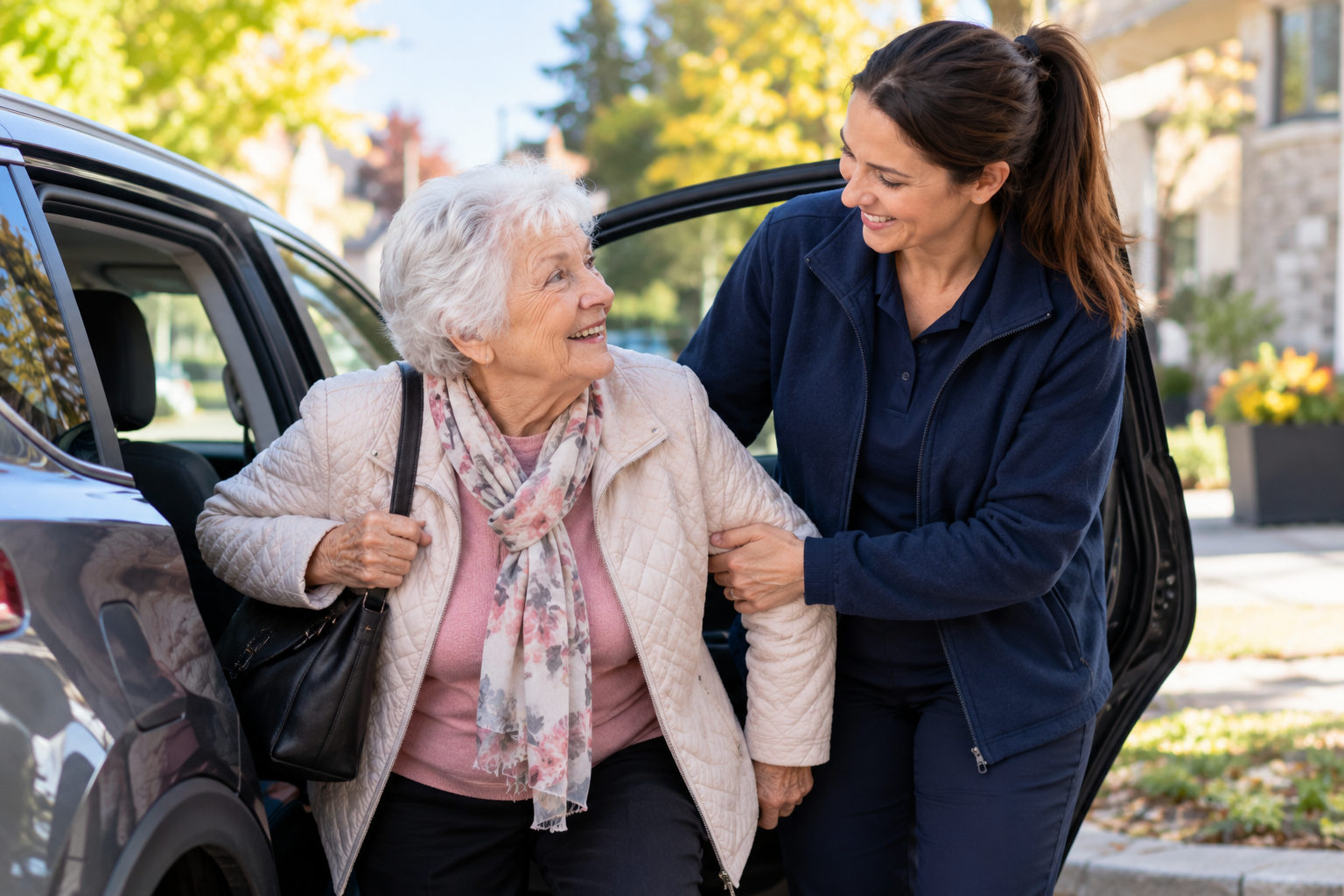
Companion Support Can Make Outings Easier
Transportation sometimes involves more than the ride itself.
An older adult may also need assistance with:
- Getting ready
- Walking to the vehicle
- Entering and exiting safely
- Carrying personal belongings
- Navigating the destination
Combining transportation with companion care can make the entire outing feel more manageable.
Social Isolation Can Increase When Driving Stops
Losing access to regular transportation can gradually reduce social interaction.
A senior may begin missing:
- Weekly coffee visits
- Community programs
- Family gatherings
- Religious services
- Recreational activities
Companion transportation helps keep those routines possible.
For older adults in Kanata, Barrhaven, Nepean, Orléans, Westboro, and other Ottawa communities, maintaining social connection can be just as important as maintaining practical errands.
Shopping Is Part of Independence Too
Shopping is often a personal activity.
Many older adults enjoy choosing:
- Groceries
- Clothing
- Gifts
- Household items
- Books
- Garden supplies
Having someone else complete every errand may be efficient, but it can remove participation.
Transportation assistance allows the senior to continue making choices personally.
Driving Changes Can Affect Couples Differently
In some households, one spouse has always done most of the driving.
If that person stops driving, both people may suddenly experience reduced independence.
A couple who previously managed appointments, groceries, and outings easily may now depend on family members.
Professional transportation can help the household maintain familiar routines.
Families Can Approach the Conversation With Respect
Driving conversations can be emotionally difficult.
Family members may feel worried about safety, while the older adult may feel judged or controlled.
Respectful communication matters.
The conversation should focus on maintaining independence rather than simply taking something away.
Instead of saying:
“You can’t drive anymore.”
Families can discuss:
“How can we make sure you still get everywhere you want to go?”
That shift changes the conversation from restriction to support.
Personalized Transportation Across Ottawa
Transportation needs vary considerably by location and lifestyle.
A senior in Manotick may need more travel support because destinations are farther apart.
Someone in Westboro may use transportation mostly for appointments and social outings.
A client in Alta Vista may need help attending healthcare visits.
Families in Kanata, Nepean, Barrhaven, Orléans, Rockcliffe, and Ottawa may have completely different routines.
That is why personalized planning matters.
Transportation Can Reduce Family Caregiver Pressure
Family caregivers often spend significant time coordinating rides.
Professional support can help families:
- Maintain work schedules
- Reduce scheduling conflicts
- Share responsibilities
- Spend more enjoyable time together
Instead of every family visit revolving around errands, relatives can focus more on their relationship.
The Goal Is Continued Participation
The question should not be:
“What can a senior no longer do?”
A more useful question is:
“What support would allow them to keep doing the things that matter?”
Transportation assistance can be part of that answer.
At Seniors Solution, we believe independence is not defined by holding a driver’s licence. It is defined by continued choice, participation, connection, and confidence.
Contact Seniors Solution
If driving has become more difficult for your aging loved one, Seniors Solution can help them remain connected to appointments, errands, family, and community activities.
Our personalized services may include transportation assistance, companionship, personal care, meal preparation, light housekeeping, respite care, dementia support, and help with everyday routines.
We proudly serve seniors throughout Ottawa, Kanata, Nepean, Barrhaven, Orléans, Westboro, Rockcliffe, Alta Vista, Manotick, and surrounding communities.
Phone: (613) 592-1250
Email: info@seniors-solution.com
Website: seniors-solution.com
Contact Seniors Solution to discuss transportation and home-care support that can help your loved one remain active, connected, and independent.

